

We work with patients, caregivers, and healthcare professionals to understand their experiences, questions, and unmet needs.
Patient Advocacy & Policy for Access to Targeted Radionuclide Therapy
Access to cancer treatment is not only a scientific question. It also depends on policy, funding, healthcare infrastructure, and whether health systems are ready to deliver what science makes possible.
The Oncidium foundation’s Patient Advocacy & Policy Department works to better understand the barriers that can prevent people from accessing Targeted Radionuclide Therapy (TRT) and to help bring patient experience into the discussions and decisions that shape access to care.
We work alongside patients, caregivers, healthcare professionals, and other stakeholders to identify what is missing, generate evidence, and support conversations that can lead to more equitable access.
Why is Patient Advocacy needed in Targeted Radionuclide Therapy?
TRT has advanced quickly in recent years. The healthcare systems needed to deliver it have not always developed at the same pace.
A treatment may be scientifically validated and approved, but patients can still face barriers related to:
- cost and reimbursement;
- where treatment is available;
- healthcare infrastructure;
- awareness and understanding of TRT;
- referral pathways.
This means that making a treatment available is not always enough. The conditions also need to be in place for eligible patients to reach it.
Our advocacy work focuses on understanding where those gaps exist and what may help address them.
What does Patient Advocacy & Policy mean at Oncidium?
At Oncidium, advocacy means working with patients, not simply speaking on their behalf.
People living with cancer and those caring for them experience healthcare systems first-hand. They know where information is missing, which barriers affect daily life and where the patient journey becomes difficult.
Their experience brings information that clinical or administrative data cannot provide on its own.
Our role is to bring these perspectives together with real-world evidence and the expertise of healthcare professionals and other stakeholders, so they can inform discussions about access and healthcare policy.
This work comes together around three priorities. Through awareness and acceptability, we help the people and institutions involved in care understand and accept TRT. Through evidence generation, we ground our advocacy in real-world data and lived experience rather than assumptions. And through governance and policy integration, we bring patient needs into decisions about healthcare policy, funding, and how care is organised.
How does Oncidium's Patient Advocacy work?
We look for recurring barriers and for the differences between countries, health systems, and patient journeys.
We bring patient experience together with real-world information and data, to see more clearly where the gaps are.
These insights then support conversations with the people and organisations involved in health policy, funding, and access.
The Experts by Experience Task Force
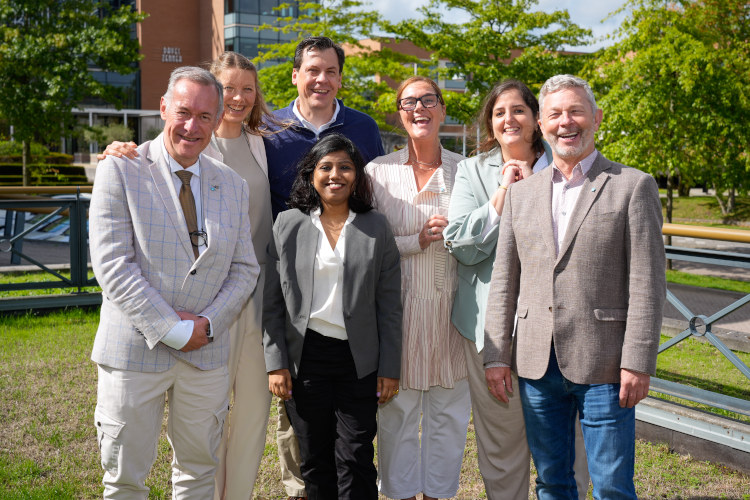
To make sure patient experience remains at the centre of this work, the Oncidium foundation created the Experts by Experience Task Force.
The Task Force brings together patients, caregivers and healthcare professionals who contribute with their own experience and perspectives.
Their role is to help guide the work of the Patient Advocacy & Policy Department by:
- checking that we are asking the right questions;
- identifying where information is still missing;
- highlighting differences between countries and patient experiences;
- helping us understand where attention is most needed.
The first Task Force meeting took place in September 2026, and its guidance will continue to shape the department’s priorities and future projects.
What are our priorities?

Awareness & Acceptability
For patients to access TRT, the people and institutions involved in their care first need to understand it.
This includes patients and caregivers, but also healthcare professionals, healthcare organisations and other stakeholders who influence access.
Our work looks at where awareness or understanding may be missing and how this can affect the patient journey.

Evidence Generation
Advocacy should be based on more than assumptions.
We work to better understand patient experiences and access barriers through real-world data, lived experience and information gathered through our projects.
This evidence can help show which issues affect patients most, where differences exist and which questions still need to be answered.

Governance and policy integration
Cancer care has changed, and more people are living with cancer over longer periods of time.
Healthcare policies and systems also need to evolve so that access to new treatment approaches can keep pace with scientific progress.
Our work aims to bring patient needs and real-world access challenges into discussions about healthcare policy, funding and the organisation of care.
Working across countries and healthcare systems
The barriers to TRT are not the same everywhere.
Our Patient Advocacy & Policy work therefore builds on local experience and existing projects in Argentina, Kenya and at the European level.
What we learn through these initiatives helps us understand how access challenges differ between countries and where different approaches may be needed.


Advocacy in Kenya
Understanding local access needs
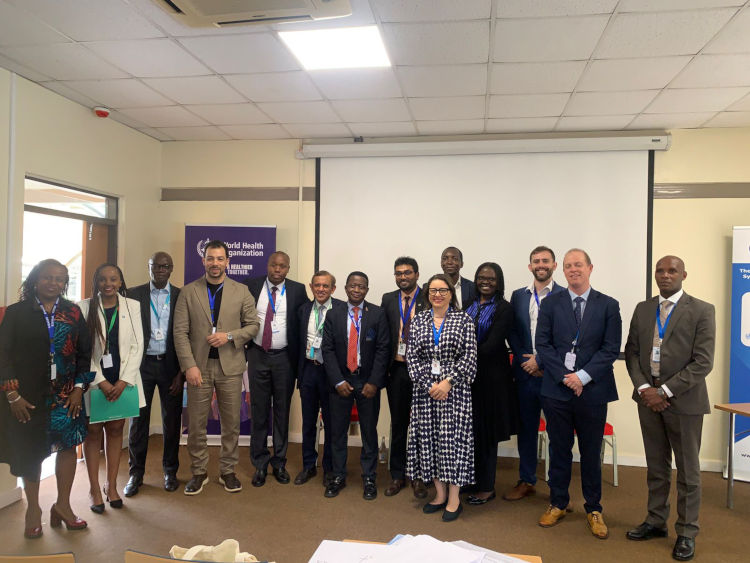
Our work in Kenya contributes to a better understanding of what is needed to expand sustainable access to TRT within a local healthcare system.
Why does lived experience matter?
Numbers can show that an access problem exists. Patient experience can show what that problem actually means in everyday life.
For one person, an access barrier may mean travelling long distances for treatment. For another, it may mean uncertainty about reimbursement, difficulty finding the right information or delays in reaching the appropriate medical team.
Understanding these experiences helps us identify questions that might otherwise go unasked.
Patient experience does not replace scientific, clinical or economic evidence. It complements it.
Building change together
Improving access to TRT requires collaboration.
Alongside patients and caregivers, the Patient Advocacy & Policy Department works with:
- healthcare professionals within and beyond nuclear medicine;
- patient organisations;
- medical societies;
- healthcare institutions;
- policymakers and other healthcare stakeholders;
- industry partners and organisations working towards better access to cancer care.
No single organisation can solve the access gap alone.
By combining lived experience, professional expertise, evidence and collaboration, we aim to better understand what patients need and what healthcare systems still need to provide.
How do Access, Education and Advocacy work together?
Improving access to TRT often requires more than one type of action.

Access
At the Oncidium foundation, we aim to improve ACCESS to radiotheranostics all around the world for patients, no matter their situation, and provide support to the healthcare professionals.

Education
We work on providing both patients & healthcare practitioners with essential knowledge. EDUCATION and awareness are essential, as everyone deserves access to the resources they need for informed decision-making.

Advocacy
We stand with patients, bringing their experiences to decision-makers to shape the policies and reimbursement that put treatment within reach.
Patient advocacy aims to make sure that the experiences, needs and priorities of patients are considered in discussions and decisions that affect their care.
At Oncidium, this means working alongside patients and caregivers to better understand barriers to TRT and bringing these insights into wider conversations about access and healthcare policy.
Health policy refers to the decisions, rules and frameworks that influence how healthcare is organised, funded and delivered.
For TRT, this may include questions related to reimbursement, infrastructure, referral pathways and how new treatments are integrated into cancer care.
Our approach is to work alongside patients rather than only speaking for them.
Patients, caregivers and healthcare professionals contribute directly through initiatives such as the Experts by Experience Task Force and other patient engagement activities.
The Experts by Experience Task Force brings together patients, caregivers and healthcare professionals to help guide the work of Oncidium’s Patient Advocacy & Policy Department.
Members help identify important questions, highlight gaps in information and provide perspectives from different healthcare systems and lived experiences.
The department works around three main priorities:
- awareness and acceptability;
- evidence generation;
- governance and policy integration.
Across all three, the aim is to better understand patient needs and the barriers that affect access to TRT.
No. TRT is not suitable for every patient or every cancer.
Oncidium’s advocacy work focuses on access and healthcare systems. Decisions about whether TRT is appropriate for an individual patient remain with qualified healthcare professionals and the patient.