
Access to cancer treatment is not only a scientific question. It is also a question of policy, funding, and whether health systems are ready to deliver what science makes possible. This is where the Oncidium foundation is placing new energy: we have established a dedicated Patient Advocacy & Policy Department to help make access to Targeted Radionuclide Therapy (TRT) more equitable, everywhere.
Advocating alongside patients has been part of the foundation's work from the start. What changes now is scale and focus. The new department brings that work together under one roof, building on projects already underway in Argentina, Kenya, and at the European level, and gives it a clear direction for the years ahead.
It is led by Catherine Bouvier Ellis, who brings more than twenty years of experience improving care, outcomes, and support for cancer patients.
"Cancer care has changed, and a growing population now lives with cancer over many years, yet access policies have not kept pace. We need new policy angles for long-term, equitable access, and a multidisciplinary approach informed by lived experience and real-world data. I have seen how powerful collaborative advocacy can be, and our new Patient Advocacy and Policy department is here to champion that."
The science is ready. Are the systems?
Targeted Radionuclide Therapy has advanced quickly in recent years. The systems meant to deliver it have not always kept pace. A treatment can be effective and approved, and still fail to reach the patients who need it because of cost, geography, or gaps in policy. Innovation only counts when it reaches people.
Encouragingly, more voices in the field are reaching the same conclusion. Attention is shifting from discovery alone toward access, a sign that the conversation is maturing and that the question of who actually receives these therapies is finally moving to the centre.
Advocating alongside patients, not only for them
Closing that gap means more than speaking on behalf of patients. It means working with them. The people living with cancer, and those caring for them, hold knowledge that no dataset captures on its own: what the barriers really look like, which questions matter most, and where the system breaks down in daily life. Those experiences need to shape the conversations and the decisions that determine access.
The Experts by Experience Task Force
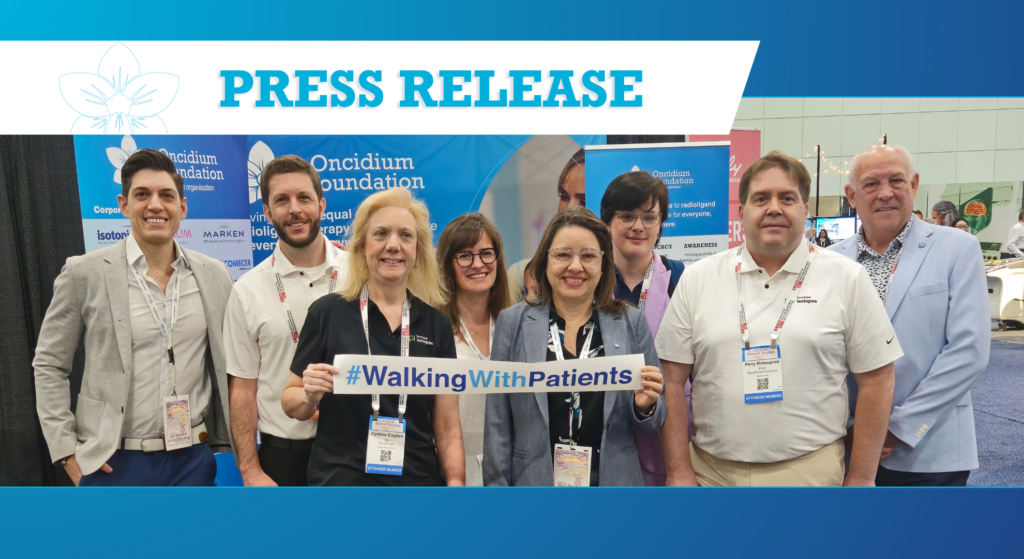
To keep that principle at the core of our work, we created the Experts by Experience Task Force. It brings together patients, caregivers, and healthcare professionals, who met for the first time in September.
The Task Force helps steer the work: checking that we are asking the right questions, spotting where information is still missing, and showing how needs and realities differ from one country to another. Their guidance will keep shaping how the department grows and where we concentrate our efforts. Systems change when the people living with cancer are genuinely heard within them.
Three priorities for the years ahead
The department's work is organised around three priorities:
- Awareness and acceptability, so that TRT is understood and accepted by the people and institutions who influence access.
- Evidence generation, to ground advocacy in real-world data and lived experience rather than assumption.
- Governance and policy integration, to help access keep pace with how cancer care has changed.
Across all three, the aim is the same: to understand what patients need, and what is still missing for the greatest number of people. The range of experiences within the Task Force helps surface questions that might otherwise go unasked, while the evidence gathered through our projects keeps the work anchored in reality.

Building this together
This is not work the foundation can do alone. Alongside patients and caregivers, we will keep working with healthcare professionals inside and beyond nuclear medicine, and with industry, medical societies, and other partners who share the goal of improving access to care. Building new partnerships and strengthening the ones we already have will be essential to moving forward.
We are at the start of this journey, and we are building it carefully: guided by the people whose experiences should inform it, and working with those who can help turn evidence into meaningful change.